
DTF Tote Bags: Add a High-Margin Revenue Stream to Your Shop (2026)
Printed tote bags are one of the easiest add-on revenue streams for a DTF shop. See the margins, sourcing, press settings, and best-selling niches.
DTF Tote Bags: Add a High-Margin Revenue Stream to Your Print Shop
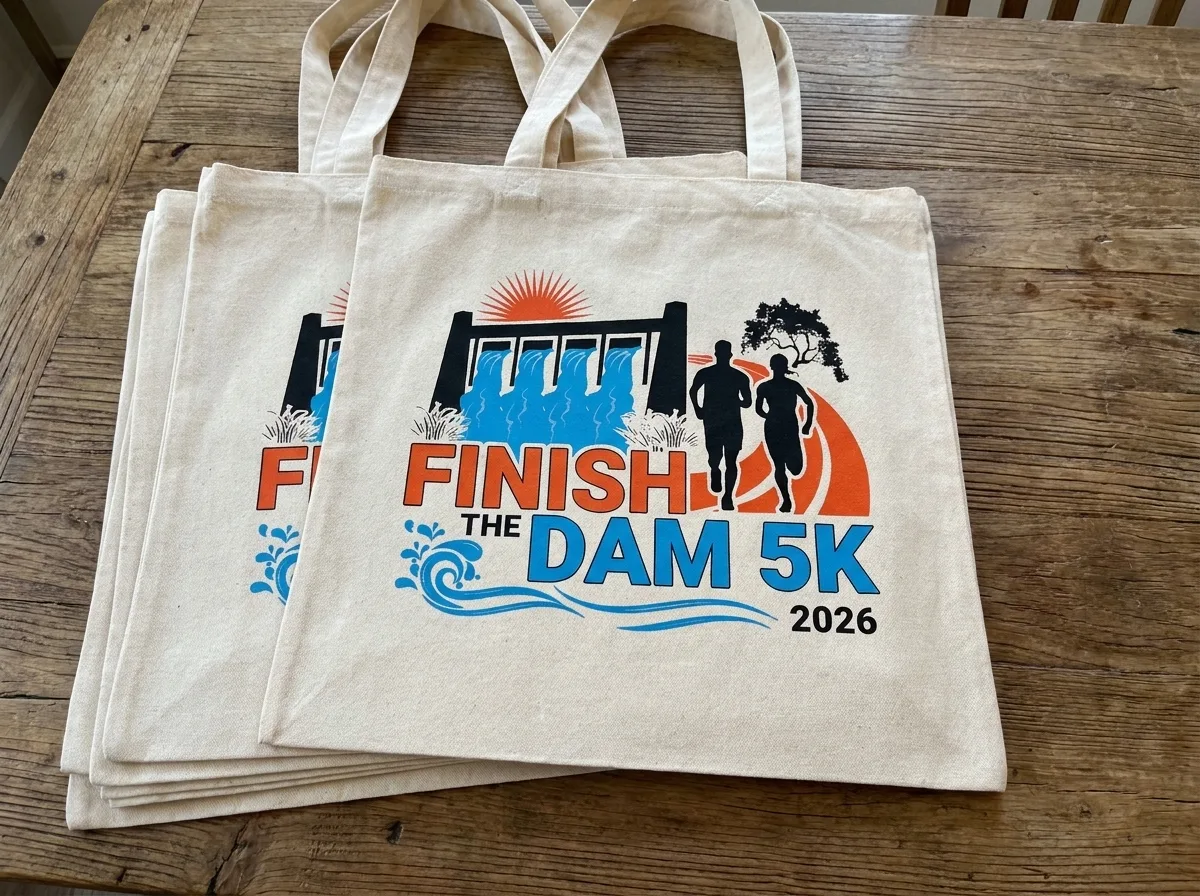
Printed tote bags are one of the lowest-effort, highest-margin products a DTF shop can add — you use the same printer, the same transfers, and the same heat press you already own, and blank cotton totes cost roughly a dollar each in bulk. For most print businesses, totes are the easiest "next offering" after t-shirts: they sell as event merchandise, customer-appreciation gifts, family-reunion keepsakes, farmers-market retail, and everyday branded swag — and they carry roughly 60–80% gross margins at typical prices. Disclosure: This article contains an affiliate link. As an Amazon Associate, DTF Database earns from qualifying purchases at no additional cost to you. We only recommend products relevant to DTF printers.The natural cotton totes pictured above were decorated with a single full-color DTF transfer for a "Finish the Dam 5K" race — a textbook example of event merchandise. One artwork file, one press, and a stack of blank bags turns into sellable product in an afternoon. This guide breaks down the economics, where to source blanks, how to press them, the niches that sell best, and the other revenue streams you can stack alongside totes.
Why Tote Bags Are a Smart Add-On for DTF Shops
Adding a new product line usually means new equipment, new training, and new inventory risk. Tote bags avoid almost all of that:
- No new equipment. A cotton canvas tote presses just like a t-shirt. If you already press DTF transfers, you can press totes today.
- Same transfers, same workflow. The DTF transfer for a tote is produced exactly the same way as a shirt transfer. You can even gang tote designs onto the same sheet as your shirt orders. See the DTF gang sheet optimization guide for squeezing more prints out of every sheet.
- Low blank cost, low inventory risk. Blank totes are inexpensive and don't have sizes, so you don't tie up cash in a size run (S–3XL) the way you do with apparel. One SKU covers every customer.
- Broad appeal. Reusable bags sell to markets that never buy custom shirts — libraries, boutiques, wedding parties, corporate gift buyers, and eco-conscious shoppers.
- Natural upsell. Anyone ordering event shirts, reunion shirts, or team spiritwear is a candidate for matching totes. It raises your average order value without new customer acquisition.
If you are still building out your product menu, totes pair naturally with the roadmap in the starting a DTF business guide.
The Economics: What a Printed Tote Actually Costs and Sells For
The appeal of totes comes down to the spread between a cheap blank and a strong retail price. Here is a realistic per-tote breakdown using a bulk blank cost of about $1.08 each (a 48-pack for roughly $52 at the time of writing):
| Line item | Cost per tote |
|---|---|
| Blank cotton tote (48-pack ≈ $52) | ~$1.08 |
| DTF transfer, single ~10" design | $1.00–$2.50 outsourced / $0.50–$1.25 in-house |
| Press labor & handling | $1.00–$2.00 |
| All-in cost | ~$3–$6 |
| Typical retail — event / bulk order | $10–$15 |
| Typical retail — boutique / single | $18–$25 |
| Gross margin | ~60–80% |
A quick example: press 48 totes from one case at roughly $4 all-in each ($192 total) and sell them at a modest $12 event price, and you are looking at about $576 in revenue and ~$384 gross profit from a single case — before you factor in any repeat orders. Run your own numbers with the DTF cost calculator, and for the full picture on transfer costs and margins, see the DTF pricing and business economics guide.
Where to Source Blank Tote Bags
You have two main sourcing paths, and most shops use both depending on order size and lead time.
Buy Blank Totes in Bulk Online
For getting started, testing designs, or fulfilling small event orders quickly, a case of blank cotton totes from Amazon is hard to beat on convenience and speed. this 48-pack of natural cotton tote bags runs about $52 — roughly $1.08 per bag before printing — and ships fast (affiliate link). Natural cotton is the ideal DTF substrate because it behaves like a cotton tee under the press.
Order From Wholesale Blank Suppliers
Once you are moving volume, wholesale blank-apparel and accessory suppliers offer better per-unit pricing, heavier canvas weights, and more color and handle options. Browse the DTF supplier and blank directory to compare sources, and see the blank apparel product codes guide for decoding style numbers.
Which Tote Material to Choose
| Tote type | Best for | DTF notes |
|---|---|---|
| Lightweight cotton (~5–6 oz) | Giveaways, event swag, budget orders | Presses like a cotton tee; the pictured 5K totes are this type |
| Heavyweight canvas (~10–12 oz) | Retail, boutique, premium branding | Sturdier hand; may need a firmer press and a pressing pillow over seams |
| Poly / non-woven (recycled) | Grocery, promo, ultra-budget | Use lower temps to avoid scorching; test first — see press settings below |
Stick with natural cotton or cotton canvas for the most reliable DTF results. Polyester and coated non-woven bags are heat-sensitive and require careful temperature testing.
How to Print Tote Bags With DTF
Pressing a tote is close to pressing a shirt, with a few adjustments for the thicker, seamed construction. These are general starting points — always confirm against your transfer supplier's spec sheet and the press settings chart by fabric.
- Pre-press the bag for 3–5 seconds to flatten it and drive out moisture and wrinkles.
- Set temperature to about 300–320°F for natural cotton totes. Drop to 260–280°F and test on a spare bag for poly or coated non-woven material to avoid scorching.
- Press for 10–15 seconds with medium-firm pressure. Canvas is thicker than a tee and needs solid, even contact.
- Mind the seams and handles. Slide a pressing pillow inside the bag so side seams and the bottom gusset don't create uneven pressure lines.
- Follow your transfer's peel instructions (hot or cold peel), then post-press for 5–10 seconds with parchment or a Teflon sheet to seal the print and improve wash durability.
Because a tote is a bag, not a flat panel, it counts as a slightly trickier substrate. The same principles that apply to bags, hats, and other 3D items are covered in DTF printing on hats, shoes and bags.
Best-Selling Tote Bag Niches
Totes sell because they are useful and endlessly customizable. The strongest sellers tie the bag to a specific group, event, or cause:
- Event and race merch. 5K runs, charity walks, festivals, and conferences order totes as swag-bag containers and keepsakes — exactly like the Finish the Dam 5K bags above.
- Family reunions. A matching tote alongside the reunion shirts is an easy add-on. Pair it with the family reunion design ideas.
- Farmers markets and boutiques. Reusable shopping totes with a local or seasonal design are steady retail sellers with high perceived value.
- Corporate and customer appreciation. Branded totes are a favorite conference giveaway and client thank-you gift — repeat B2B orders at bulk quantities.
- Schools, teachers, and libraries. Book totes, teacher-appreciation gifts, and fundraiser bags move in volume during the school year.
- Weddings and parties. Welcome-bag totes for out-of-town guests are a growing custom-order category.
Leaning into a specific event or community is one of the most reliable ways to grow a print shop — the case for it is laid out in why niching down your DTF shop works.
Beyond Totes: Other DTF Revenue Streams to Stack
Totes are the easiest first add-on, but the same "one transfer, one press" model extends across a whole catalog of products. Once totes are running, consider stacking:
- Blank accessories — koozies, beanies, cups, and pouches all take DTF and sell as impulse add-ons. See the blank accessories DTF guide.
- Hoodies and sweatshirts — the highest-margin apparel item, since a custom hoodie retails at $30–$50 while the transfer cost is similar to a tee.
- Ready-to-press gang sheets — sell your unused sheet space, or offer custom gang sheets to other makers as a wholesale product.
- Hard and specialty substrates — tumblers, signs, and other UV DTF-friendly items open up gift and drinkware markets.
- Seasonal and holiday drops — themed designs on shirts and totes timed to holidays and local events. Ideas are in the DTF design ideas by holiday and season.
The pattern is the same every time: one design, minimal added equipment, and a new product to offer the customers you already have.
Frequently Asked Questions
How much can you make selling printed tote bags?
At a bulk blank cost near $1 and an all-in cost of roughly $3–$6 per printed tote, event and bulk orders that sell for $10–$15 each yield about 60–75% gross margin, and boutique or single-unit retail at $18–$25 can push margins even higher. A single 48-pack of blanks pressed and sold at a $12 event price can generate several hundred dollars in gross profit.
What kind of tote bags are best for DTF printing?
Natural cotton and cotton canvas totes are best because they press just like a cotton t-shirt and bond well with DTF transfers. Lightweight cotton (around 5–6 oz) suits giveaways and events, while heavier 10–12 oz canvas suits premium retail. Avoid untested polyester or coated non-woven bags, which are heat-sensitive and can scorch.
What temperature do you press DTF on a cotton tote bag?
For natural cotton totes, press at about 300–320°F for 10–15 seconds with medium-firm pressure, then post-press for 5–10 seconds. Pre-press the bag first to remove moisture, and use a lower temperature (260–280°F) with a test press for polyester or coated non-woven material.
Do you need special equipment to print tote bags with DTF?
No. If you already press DTF transfers onto shirts, you have everything you need. The only helpful extra is a pressing pillow to slide inside the bag so seams and the bottom gusset do not create uneven pressure. The transfers are produced the same way as shirt transfers.
How much do blank tote bags cost in bulk?
Blank natural cotton totes commonly run around $1 to $2 each in case quantities. A 48-pack sells for roughly $52 at the time of writing, which works out to about $1.08 per bag before printing. Heavier canvas and specialty handles cost more; wholesale suppliers offer better per-unit pricing at higher volumes.
Are printed tote bags a good product to sell?
Yes. Totes have low blank cost, no sizing to inventory, broad appeal across events and retail, and strong margins, making them one of the easiest add-on products for an existing DTF or print business. They also raise average order value as a matching add-on to shirt and event orders.
Start Adding Totes to Your Menu
Printed totes turn tools you already own into a new profit center with almost no added risk. Grab a case of blank cotton totes, press a test design, and price it against the numbers above.
- Source blanks: blank cotton totes on Amazon (48-pack) (affiliate) or the DTF supplier directory
- Price the job: DTF cost calculator
- Nail the margins: DTF pricing & business economics guide
Tags
About the Author
DTF Database Founder
Darrin DeTorres has over 10 years of experience in the print industry, specializing in screen printing, sublimation, embroidery, HTV, and DTF printing. He runs Notice Me Marketing and Media, a custom apparel production company that prints thousands of shirts per month.
More from Business Tips
Kwanzaa runs Dec. 26, 2026 to Jan. 1, 2027. The seven principles, traditional colors, and respectful shirt ideas for custom and DTF shops.
Super Bowl LXI is Sunday, Feb. 14, 2027, Valentine's Day. What the NFL protects, phrases shops can use instead, and shirt ideas for both holidays.
St. Jude Memphis (Dec. 5), CIM (Dec. 6), Kiawah Island (Dec. 12) and Honolulu (Dec. 13) marathon dates, shirt ideas, fabric settings and order dates.
Explore DTF Database
Browse and compare 20+ verified DTF printer models by price, features, and specifications.
Read moreCalculate your per-print costs, profit margins, and ROI for DTF printing.
Read moreBrowse verified DTF suppliers for ink, film, powder, and equipment.
Read moreFind DTF transfer suppliers shipping to your state, with verified turnaround times.
Read moreMetro-level DTF supplier guides for Los Angeles, NYC, Dallas, Houston, and more.
Read moreStep-by-step guide to the DTF printing process with temperatures and troubleshooting.
Read more