
What Is Viscose? Viscose Fabric Properties and How to DTF Print on It
Viscose is a regenerated cellulose fiber made from wood pulp — a semi-synthetic material that is neither fully natural nor fully synthetic. A complete guide to what viscose is, how it compares to cotton, its properties (breathability, drape, stretch), and how to DTF print on viscose and viscose blends without scorching.
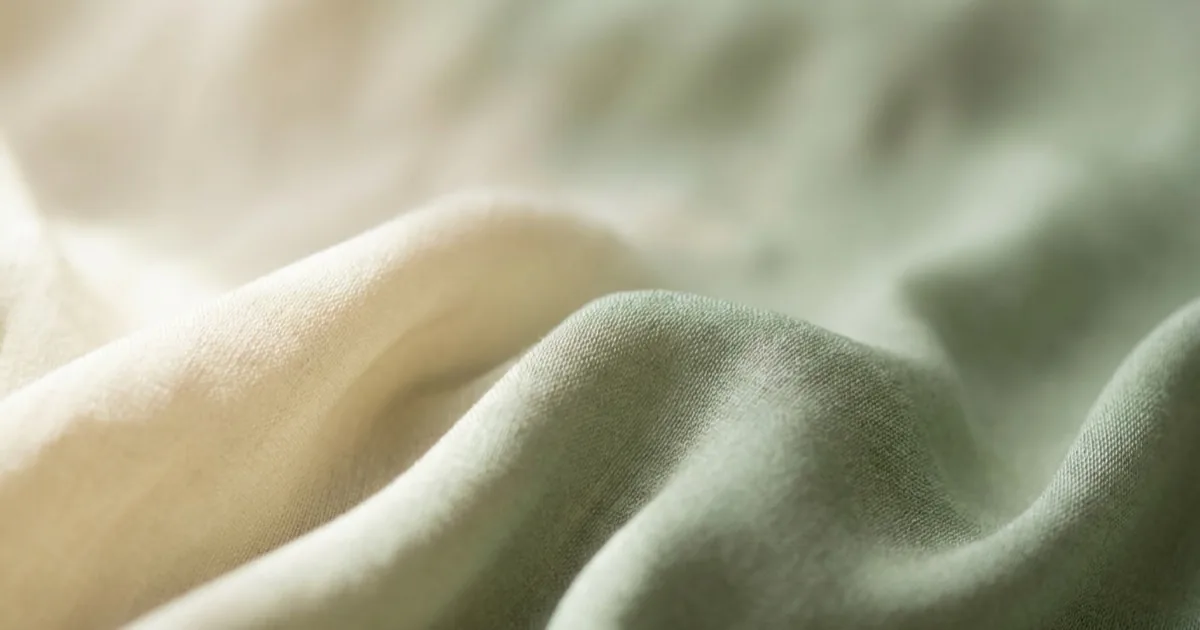
What Viscose Is Made From
Viscose starts as cellulose — the structural material in plant cell walls. The cellulose for viscose typically comes from fast-growing trees: beech, pine, eucalyptus, spruce, and sometimes bamboo. Wood pulp is the raw material.
The manufacturing process converts that wood pulp into a spinnable fiber:
- Pulping — wood is broken down into a purified wood pulp rich in cellulose.
- Chemical treatment — the pulp is treated with sodium hydroxide (caustic soda) to create “alkali cellulose.”
- Aging and xanthation — the alkali cellulose is aged and then treated with carbon disulfide, forming a compound called cellulose xanthate.
- Dissolving — the xanthate is dissolved in more sodium hydroxide, producing a thick, honey-colored liquid. This liquid is the “viscose” — the solution gets its name from its viscous consistency.
- Spinning — the viscose solution is extruded through a spinneret (a showerhead-like nozzle) into an acid bath, where it regenerates back into solid cellulose fiber.
- Finishing — the regenerated filaments are washed, bleached, cut, and spun into yarn.
The finished fiber is chemically still cellulose — the same base material as cotton — but its physical structure has been rebuilt by the manufacturing process. That is why viscose is called a “regenerated” fiber.
Is Viscose Natural, Synthetic, or Something Else?
This is the single most common question about viscose, and the honest answer is: viscose is semi-synthetic, also called a regenerated fiber.
- It is not fully natural like cotton, linen, or wool, because the fiber is manufactured through an industrial chemical process rather than harvested directly from a plant or animal.
- It is not fully synthetic like polyester, nylon, or acrylic, because those are made from petrochemicals, while viscose is made from a renewable natural raw material (wood cellulose).
- The correct category is regenerated cellulose fiber or semi-synthetic fiber.
The US Federal Trade Commission classifies rayon (including viscose) as a manufactured fiber, distinct from both natural and synthetic categories. In everyday apparel marketing, viscose is often described as “plant-based” — accurate as to the raw material, but it does not mean viscose is processed the way cotton is.
Viscose vs Cotton
Both viscose and cotton are cellulose-based, but they behave noticeably differently:
| Property | Viscose | Cotton |
|---|---|---|
| Source | Regenerated wood pulp | Natural cotton bolls |
| Feel | Silky, smooth, cool | Soft, matte, warmer |
| Drape | Excellent, fluid drape | Stiffer, structured |
| Breathability | Very breathable, absorbent | Breathable, absorbent |
| Strength (dry) | Moderate | Strong |
| Strength (wet) | Weak — loses significant strength | Stays strong when wet |
| Shrinkage | High — prone to shrinking | Moderate |
| Wrinkle resistance | Wrinkles easily | Wrinkles easily |
| Heat tolerance | Lower — scorches more easily | Higher |
| Cost | Often lower than premium cotton | Varies |
The headline difference for anyone decorating garments: viscose is weaker than cotton when wet and less tolerant of heat. Cotton handles a 320°F heat press without complaint. Viscose is more heat-sensitive and demands lower temperatures and shorter dwell times.
Viscose wins on drape and feel — it has a fluid, silky hand that cotton cannot match, which is why it shows up in flowy garments, linings, and soft fashion tees. Cotton wins on durability, especially through repeated washing.
Viscose Properties Explained
Breathability
Viscose is highly breathable and moisture-absorbent. It wicks moisture away from the skin and feels cool to the touch, which makes it popular for warm-weather and lightweight apparel. Its absorbency is actually higher than cotton's, which is a benefit for comfort but a complication for decoration — absorbent fabric can wick ink and reacts more visibly to heat and moisture.
Stretch
Pure viscose has little inherent stretch. It is not an elastic fiber. The stretch you feel in many viscose garments comes from added elastane/spandex (a 95% viscose / 5% elastane blend, for example) or from the knit structure of the fabric rather than the fiber itself. Do not assume a viscose garment will stretch — check the blend.
Drape
Drape is viscose's signature property. The fiber is smooth and flexible, so viscose fabric falls and flows in a fluid way that mimics silk. This is why viscose is favored for dresses, flowy tops, and garments where movement matters.
Durability
Viscose is the weak point. The fiber loses significant strength when wet, so viscose garments are vulnerable during washing. Viscose also shrinks and can lose shape over time. Hand-washing or gentle machine cycles extend the life of viscose garments considerably.
Heat sensitivity
Viscose has a lower heat tolerance than cotton or polyester. Excessive heat causes scorching (yellowing or browning), glazing (a shiny pressed mark), and fiber damage. This is the property that matters most for DTF and heat-press decoration.
Can You DTF Print on Viscose?
Yes — DTF works on viscose, but it requires lower heat-press settings and testing. DTF is actually one of the better decoration methods for viscose because the transfer adhesive does not depend on fiber content the way sublimation does. The challenge is purely heat management.Recommended approach for DTF on viscose
- Lower the press temperature. Where cotton runs at 300–325°F, drop viscose to roughly 265-285°F. The exact number depends on the specific fabric and blend — always test.
- Shorten the dwell time. Use the shortest press time that fully activates the adhesive. Longer dwell at high temperature is what scorches viscose.
- Use a cover sheet. Place parchment paper or a Teflon sheet between the heat platen and the garment to diffuse direct heat and prevent glazing.
- Reduce pressure slightly. Medium pressure is usually enough. Excessive pressure combined with heat increases the risk of a shiny pressed mark on viscose.
- Pre-press carefully. A short 3-5 second pre-press removes moisture and wrinkles, but do not over-pre-press — every heat exposure adds scorch risk.
- Choose a low-temp DTF film and adhesive if available. Some DTF adhesive powders are formulated to activate at lower temperatures, which is ideal for heat-sensitive fabrics like viscose.
The scorch risk
The failure mode to watch for is scorching — a yellow or brown discoloration, or a shiny glazed patch where the platen pressed. Scorching is permanent and ruins the garment. It is caused by too much heat, too long a dwell, or direct platen contact without a cover sheet. Every one of those is controllable. Test before every production run on viscose, because viscose blends vary widely.
The Pre-Press Test Protocol for Viscose
Because viscose blends are inconsistent, never run a production batch without testing first:
- Get a sample garment from the exact same blank lot you will use for production. Viscose content and finish vary between lots.
- Start cool. Set the press to the low end of the range — around 265°F — with a cover sheet in place.
- Press a small test transfer (or a scrap of DTF film with adhesive) for the shortest viable time.
- Inspect immediately. Check for scorching, glazing, and adhesive activation. Lift the cover sheet and look at the fabric directly.
- Wash test. Wash the sample on the cycle your customers will use, then check transfer adhesion and any color or texture change in the viscose.
- Adjust and repeat. If adhesion is incomplete, raise temperature or time in small increments. If you see any scorching, lower it. Find the narrowest window that gives full adhesion with zero fabric damage.
- Record the settings for that specific blend and keep them for future runs of the same blank.
This protocol takes 20 minutes and saves entire production runs. Viscose is unforgiving of guesswork.
Can You Sublimate on Viscose?
No — sublimation does not work on viscose. This is a critical distinction. Sublimation dye bonds to polyester molecules; it gasifies under heat and embeds permanently into polyester fibers. Viscose is cellulose, not polyester, so there is nothing for the sublimation dye to bond to. A sublimation print on pure viscose will look faded, will wash out, and will not be permanent.This is one of the main reasons DTF is the better choice for viscose and viscose-heavy garments: DTF does not care about fiber content. The adhesive bonds mechanically to the fabric surface regardless of whether the fibers are cotton, polyester, viscose, or a blend. Where sublimation is restricted to polyester, DTF prints full-color designs on viscose, cotton, and everything in between.
The only caveat: a viscose blend with high polyester content (for example a 60% poly tri-blend) can take sublimation on the polyester portion, producing a deliberately faded vintage look. But on a viscose-dominant fabric, sublimation is not a viable method — use DTF.
Viscose in Print-on-Demand: The Tri-Blend Connection
Most DTF decorators encounter viscose not as a pure fabric but as the rayon component of a tri-blend t-shirt. The classic tri-blend formula is roughly 50% polyester / 25% combed cotton / 25% rayon (viscose). Popular tri-blend blanks like Bella+Canvas 3413 and Next Level 6010 use this construction.
Viscose is in the tri-blend recipe for three reasons:
- Hand feel — viscose adds the silky, soft, broken-in feel that makes tri-blends so popular.
- Drape — viscose gives tri-blend tees their fluid, lightweight drape.
- Heather effect — viscose, cotton, and polyester all take dye differently, so a tri-blend looks heathered even when piece-dyed. (See the companion heather fabric guide for how that works.)
Viscose, Modal, and Lyocell — The Rayon Family
Viscose is one member of a family of regenerated cellulose fibers. Decorators encounter all three:
- Viscose — the original and most common regenerated cellulose fiber. Soft, drapey, heat-sensitive, weak when wet.
- Modal — a stronger, more durable variant of rayon, made with a modified process. Modal holds up better in washing and resists shrinking more than standard viscose. Common in underwear and premium soft tees.
- Lyocell (often sold under the brand name TENCEL) — made with a closed-loop solvent process that is more environmentally controlled. Lyocell is stronger than viscose, including when wet, and has a smooth premium hand.
All three are cellulose-based, all three behave similarly under a heat press (heat-sensitive, scorch-prone), and all three reject sublimation for the same reason — no polyester. The DTF approach for modal and lyocell is the same as for viscose: lower temperature, cover sheet, test first.
Frequently Asked Questions
Is viscose the same as rayon?
Viscose is a type of rayon. “Rayon” is the broad category of regenerated cellulose fibers; viscose is the most common production method within that category. In casual usage and apparel labeling, “viscose” and “rayon” are often used interchangeably. Modal and lyocell are other types of rayon.
Is viscose a breathable fabric?
Yes. Viscose is highly breathable and moisture-absorbent — actually more absorbent than cotton. It feels cool against the skin, which makes it comfortable in warm weather.
Is viscose stretchy?
Pure viscose has little stretch. Any stretch in a viscose garment comes from added elastane/spandex or from the knit structure. Always check the fabric blend before assuming a viscose garment stretches.
Does viscose shrink?
Yes, viscose is prone to shrinking, especially in hot water or a hot dryer. Wash viscose in cold water and air-dry or tumble-dry low to minimize shrinkage. This matters for decorators: shrinkage after the customer's first wash can distort a transfer.
Can you iron viscose?
Yes, but on a low setting and ideally inside-out or with a pressing cloth. Viscose scorches and glazes under high heat. The same heat sensitivity is why DTF on viscose requires reduced press temperatures.
Why does viscose feel weak when wet?
When viscose absorbs water, the cellulose structure swells and the fiber temporarily loses much of its tensile strength. This is why wet viscose garments are vulnerable in the wash and should be handled gently.
Is viscose good for t-shirts?
Viscose makes very comfortable, soft, drapey t-shirts, which is why it is a key ingredient in tri-blend tees. The trade-off is durability — pure viscose tees wear faster than cotton. Tri-blends balance the soft viscose feel with the durability of polyester and cotton.
What is the best printing method for viscose?
DTF is the most reliable decoration method for viscose because it does not depend on fiber content. Sublimation does not work on viscose at all. Screen printing works but requires careful heat curing. HTV (heat transfer vinyl) works with low-temp vinyl. For full-color designs on viscose, DTF is the recommended method.
Can you DTF on a 100% viscose shirt?
Yes. Lower the heat-press temperature to roughly 265-285°F, shorten the dwell time, use a parchment or Teflon cover sheet, and run the pre-press test protocol on a sample first. The transfer adhesion is fine — the only real challenge is avoiding scorch.
Is viscose eco-friendly?
It depends. The raw material (wood cellulose) is renewable, but the standard viscose process uses carbon disulfide and other chemicals that raise environmental and worker-safety concerns when not properly managed. Lyocell (TENCEL), made with a closed-loop solvent process, is generally considered the more environmentally controlled option in the rayon family.
Does DTF crack on viscose?
Properly applied DTF on viscose does not crack any more than DTF on cotton. The risk with viscose is scorching the fabric during application, not the transfer cracking afterward. Get the press settings right and the transfer behaves normally.
Why does my viscose tri-blend look heathered?
The three fibers in a tri-blend — polyester, cotton, and viscose/rayon — each absorb dye at a different intensity. Even when the fabric is dyed in one bath, the three fiber types come out slightly different shades, producing a heathered look without any intentional yarn-blending step.
Related Resources
For the companion guide on heathered fabric and tri-blend behavior, see the heather fabric and DTF guide. For DTF press settings by fabric type, see the DTF temperature and time chart. For the full DTF process from design to pressed garment, see the DTF process guide. And for DTF terms and definitions, see the DTF glossary.
This assumes some familiarity with the process — what DTF means fills in the gaps.
Tags
About the Author
DTF Database Founder
Darrin DeTorres has over 10 years of experience in the print industry, specializing in screen printing, sublimation, embroidery, HTV, and DTF printing. He runs Notice Me Marketing and Media, a custom apparel production company that prints thousands of shirts per month.
More from DTF Basics
Explore DTF Database
Browse and compare 20+ verified DTF printer models by price, features, and specifications.
Read moreCalculate your per-print costs, profit margins, and ROI for DTF printing.
Read moreBrowse verified DTF suppliers for ink, film, powder, and equipment.
Read moreFind DTF transfer suppliers shipping to your state, with verified turnaround times.
Read moreMetro-level DTF supplier guides for Los Angeles, NYC, Dallas, Houston, and more.
Read moreStep-by-step guide to the DTF printing process with temperatures and troubleshooting.
Read more