
2026 Apparel Tariffs: What Blank T-Shirt Buyers Should Know
Section 301 forced-labor tariffs of 10% to 12.5% replaced the Section 122 tariff on July 24, 2026. How they hit blank tees, DTF film and ink, who is exempt.
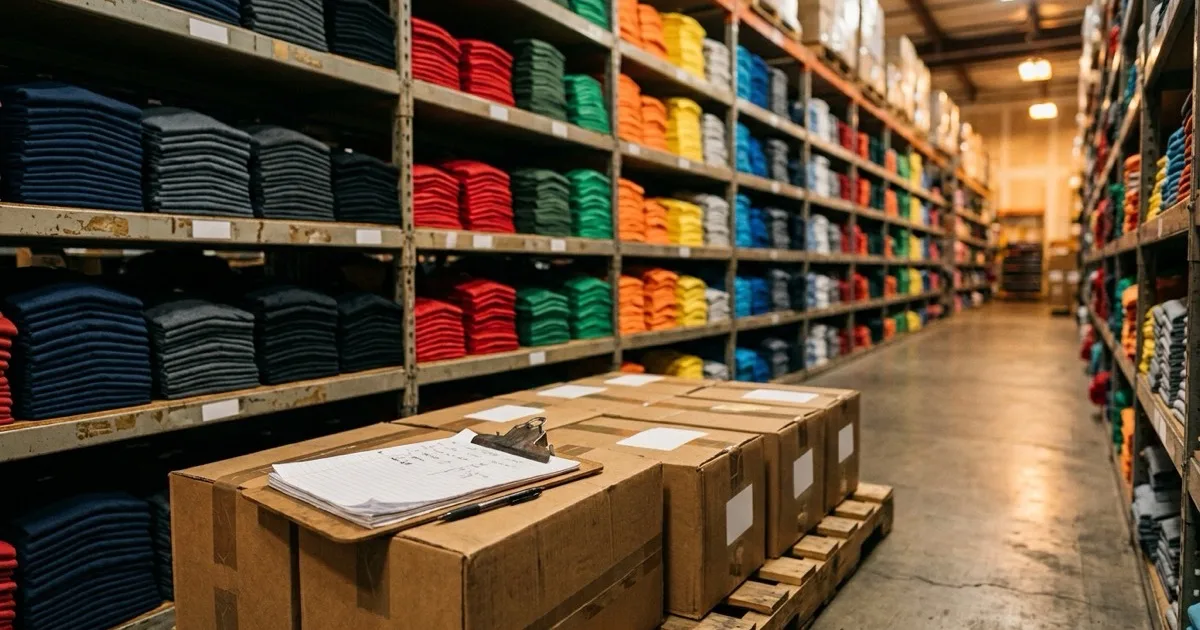
This article explains the current structure, which blank brands and consumables are affected, and what a DTF or custom apparel business can do about it. It is a summary for decorators, not legal or customs advice. Importers should confirm rates with a licensed customs broker.
The 2026 Tariff Timeline
| Date | Change |
|---|---|
| February 24, 2026 | Section 122 global tariff of 10% takes effect on most imports |
| July 23, 2026 (midnight) | Section 122 tariff expires at its 150-day statutory limit |
| July 24, 2026 | Section 301 forced-labor tariffs take effect on roughly 60 economies at 10% or 12.5% |
| September 1, 2026 (earliest) | Textile and apparel tariff-rate quotas for Bangladesh, Cambodia, Indonesia, and Malaysia may begin |
The Section 301 action came out of investigations by the US Trade Representative into whether trading partners block imports made with forced labor. Economies that have such a prohibition were placed in the 10 percent tier; those without one were placed at 12.5 percent. The duties apply to most goods in chapters 1 through 97 of the tariff schedule, which includes apparel, textiles, printers, film, and ink.
Who Pays What: Apparel Sourcing Countries
The base most-favored-nation duty on cotton knit T-shirts (HTS 6109.10) is 16.5 percent and has not changed. The Section 301 tariff is added on top. Trade-law summaries published in July 2026 place major apparel sources as follows:
| Country or group | Section 301 forced-labor tier | Notes |
|---|---|---|
| Mexico, Canada | Exempt | USMCA-qualifying goods |
| Honduras, Nicaragua, El Salvador, Guatemala, Dominican Republic, Costa Rica | Exempt for qualifying textiles and apparel | CAFTA-DR textile exemption; Honduras and Nicaragua otherwise at 10% |
| Bangladesh, India, Pakistan, Cambodia, Indonesia, Sri Lanka, Jordan, Malaysia | 10% | Textile quotas at reduced rates possible for Bangladesh, Cambodia, Indonesia, Malaysia |
| Vietnam, Egypt, Turkey | 12.5% | |
| China | 12.5% | Stacks with existing Section 301 China duties |
| European Union, Taiwan | 0% to 10% net of MFN rate | Capped under existing trade deals |
| Japan, South Korea, Switzerland | 0% to 12.5% net of MFN rate | |
| United Kingdom | 10% |
Third-party tariff calculators put the effective all-in rate on a Chinese-made cotton tee in the mid-30 percent range, on a Vietnamese tee near 29 percent, and on a Bangladeshi or Indian tee around 26.5 percent, versus 0 percent for a CAFTA-DR or USMCA garment. Treat those figures as estimates; the exact stack depends on the product's classification and origin certification.
What This Means for the Blanks You Buy
Most of the volume blanks in the custom-apparel market are made in the Western Hemisphere:
- Gildan sews the bulk of its tees and fleece in Honduras, Nicaragua, and the Dominican Republic, with additional capacity in Bangladesh. Its Comfort Colors and American Apparel lines were growing at double-digit rates in the second quarter of 2026. Gildan's July 30 earnings release said pricing actions partially offset tariff costs, that it received about $25 million in Phase I tariff refunds during the quarter, and that it expects roughly $220 million in IEEPA-related refunds during 2026.
- BELLA+CANVAS, now being acquired by SanMar, emphasizes Los Angeles and Central American production. See our SanMar acquisition coverage.
- Next Level, District, Port & Company, and Sport-Tek source largely from Central America and Mexico, though specific styles vary.
The practical takeaway: the Section 301 tariff does not directly hit most CAFTA-DR or USMCA blanks. What it does is raise the floor for anything sourced from Asia, including many performance polyester styles, some fleece, headwear, and bags. Distributors do not always publish country of origin on the product page, so ask. Our wholesale blank apparel buying guide covers how to work with distributors, and the blank product codes guide helps you spot which lines are which.
Why have blank prices still crept up if most tees are exempt? Three reasons decorators reported through 2026: distributors raising list prices across the board to cover mixed-origin catalogs, the earlier Section 122 period (February to July) that did apply to everything, and consolidation among distributors, with SanMar and S&S Activewear now controlling most of the wholesale channel.
What This Means for DTF Consumables and Equipment
This is where DTF shops feel the change most. The large majority of DTF film, hot-melt powder, and aftermarket ink sold in the US is manufactured in China, and so are most entry-level and mid-range DTF printers. Those goods pay the 12.5 percent forced-labor tariff stacked on the existing Section 301 China duties and the base rate.
What to expect:
- Film and powder prices from US resellers reflect the new stack in inventory purchased after late July. Expect quote changes rather than sudden jumps, since most resellers carry weeks of stock.
- Printers from Chinese manufacturers, including converted-Epson bundles and XP600-based 13-inch machines, are the most exposed. Buyers comparing a Chinese-built desktop unit against a machine built elsewhere should ask where it is assembled. Our DTF printer database lists manufacturer and supplier for each model.
- Epson printheads and OEM inks sourced from Japan are in a different tier (0 to 12.5 percent net of MFN), which is one reason OEM consumables may not move as much as aftermarket ones.
Transfer suppliers absorb these costs first. If you buy gang sheets, watch for per-square-inch price adjustments and minimum-order changes this fall. The DTF transfer cost and durability guide explains what goes into a transfer's price.
Five Moves for a Custom Apparel Business
- Ask every supplier for country of origin. For blanks, film, powder, and ink. You cannot price a job correctly without knowing which tariff tier your inputs sit in.
- Favor CAFTA-DR and USMCA blanks for volume work. Gildan, Comfort Colors, BELLA+CANVAS, and most SanMar house brands qualify for the bulk of their tee styles. Confirm by style, not by brand.
- Qualify a second blank for each core style. Consolidation plus tariff volatility means a single-source style can disappear or reprice without warning. Our best shirts and blanks for DTF lists tested alternatives.
- Reprice in cost-plus terms, not flat rates. If your transfer supplier moves from 4 to 4.5 cents per square inch, a flat $12 shirt price silently gives up margin. The DTF pricing strategy guide has a worksheet.
- Lock in fall and holiday consumables now. Film and powder do not expire quickly when stored dry. Buying a quarter's worth ahead of a price change is a reasonable hedge for a busy season.
What Could Change Next
Three items to watch:
- Textile tariff-rate quotas. USTR said reduced-rate quotas for Bangladesh, Cambodia, Indonesia, and Malaysia, tied to each country's purchases of US cotton, could start no earlier than September 1, 2026. They would lower costs on some Asian-made apparel once implemented.
- Refund flows. Gildan's expectation of roughly $220 million in refunds shows earlier tariff collections are being returned to some importers. Whether that reaches wholesale price lists depends on each supplier.
- Further Section 301 actions. The forced-labor tariffs are a final action on 60 investigations, but rates and country lists can be modified by USTR notice.
We will update this article as rates or exemptions change.
Frequently Asked Questions
Are there tariffs on blank T-shirts in 2026?
Yes. Imported cotton T-shirts pay a base duty of 16.5 percent, and since July 24, 2026 most countries also pay a Section 301 forced-labor tariff of 10 or 12.5 percent. Blanks that qualify under USMCA (Mexico, Canada) or the CAFTA-DR textile provisions (Honduras, Nicaragua, El Salvador, Guatemala, Dominican Republic, Costa Rica) are exempt from the Section 301 tariff.
What replaced the Section 122 tariff?
The 10 percent Section 122 global tariff expired at midnight on July 23, 2026 after its 150-day statutory limit. It was replaced the next day by Section 301 forced-labor tariffs of 10 percent or 12.5 percent on roughly 60 economies.
Are Gildan shirts affected by the 2026 tariffs?
Mostly not by the Section 301 forced-labor tariff, because the bulk of Gildan's tees and fleece are sewn in Honduras, Nicaragua, and the Dominican Republic, which are exempt under CAFTA-DR. Styles made in Gildan's Bangladesh facilities fall in the 10 percent tier. Gildan's second-quarter 2026 report said pricing actions partially offset tariff costs.
Do tariffs apply to DTF film, powder, and ink?
Yes. DTF film, adhesive powder, and aftermarket ink are mostly manufactured in China and pay the 12.5 percent forced-labor tariff stacked on existing Section 301 China duties and the base rate. US resellers pass that through in inventory purchased after late July 2026.
Which countries are exempt from the Section 301 forced-labor tariff?
Goods qualifying under USMCA from Mexico and Canada are exempt, and qualifying textiles and apparel from the six CAFTA-DR countries (Costa Rica, Dominican Republic, El Salvador, Guatemala, Honduras, Nicaragua) are exempt. Most other economies pay 10 or 12.5 percent.
How should a DTF business respond to the tariff changes?
Ask suppliers for country of origin on blanks and consumables, favor CAFTA-DR and USMCA blanks for volume work, qualify a backup blank for each core style, price jobs on a cost-plus basis so consumable increases flow through, and stock a quarter of film and powder ahead of the holiday season.
Related Resources
For the consolidation side of the story, read SanMar acquires BELLA+CANVAS. For sourcing blanks and transfers, use the DTF supplier directory and the buy DTF transfers online guide.
Tags
About the Author
DTF Database Founder
Darrin DeTorres has over 10 years of experience in the print industry, specializing in screen printing, sublimation, embroidery, HTV, and DTF printing. He runs Notice Me Marketing and Media, a custom apparel production company that prints thousands of shirts per month.
More from Business Tips
Explore DTF Database
Browse and compare 20+ verified DTF printer models by price, features, and specifications.
Read moreCalculate your per-print costs, profit margins, and ROI for DTF printing.
Read moreBrowse verified DTF suppliers for ink, film, powder, and equipment.
Read moreFind DTF transfer suppliers shipping to your state, with verified turnaround times.
Read moreMetro-level DTF supplier guides for Los Angeles, NYC, Dallas, Houston, and more.
Read moreStep-by-step guide to the DTF printing process with temperatures and troubleshooting.
Read more