UVDTF vs. DTF Printing: Understanding the Differences, Use Cases, and Which Technology is Right for Your Business
DTF and UVDTF sound alike but serve completely different markets. Learn the key differences in ink technology, application methods, ideal substrates, and which vendors in our directory offer each service.
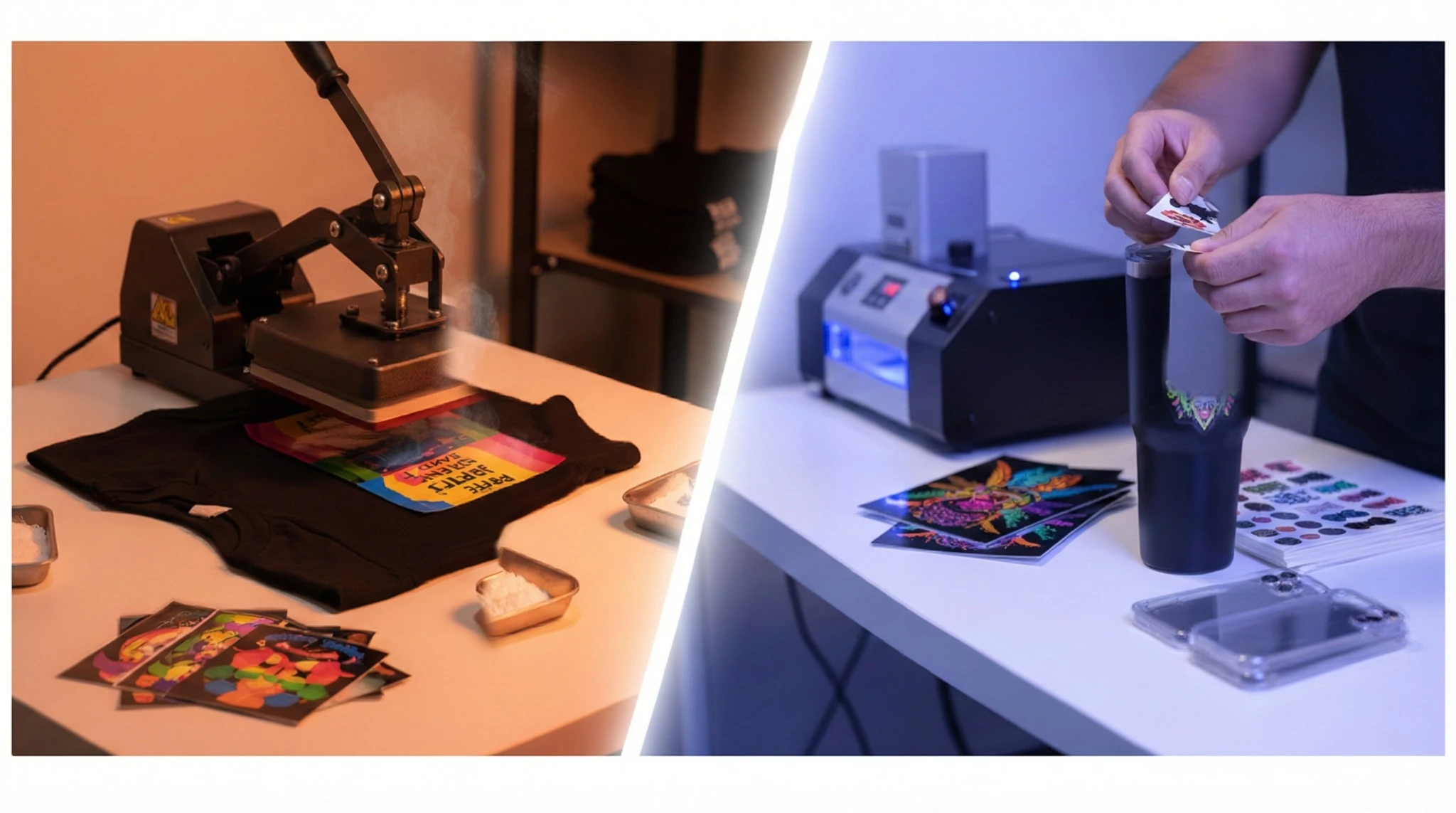
UVDTF vs. DTF Printing: Understanding the Differences, Use Cases, and Which Technology is Right for Your Business
If you've been exploring the world of custom printing, you've likely encountered two technologies that sound deceptively similar: DTF and UVDTF. While they share an acronym and some fundamental concepts, these are distinctly different printing technologies designed for vastly different applications. Understanding the difference between UVDTF and regular DTF printing can save you thousands of dollars in equipment purchases and help you choose the right solution for your specific product needs.
In this guide, we break down everything you need to know about both technologies — their ideal use cases, the types of products each excels at decorating, and the different printer options available in the market. If you're brand new to DTF, we recommend starting with our Complete Guide to DTF Printing before diving in here. And if you want a deeper look at UV DTF specifically, check out our dedicated UV DTF guide.
What is DTF (Direct-to-Film) Printing?
DTF, or Direct-to-Film printing, is a garment decoration technology that has revolutionized the custom apparel industry. The process involves printing designs onto a special PET film using water-based pigment inks, applying a hot-melt adhesive powder to the wet ink, curing the powder, and then heat-pressing the transfer onto fabric.
The "direct" in Direct-to-Film refers to the printing process — the design goes directly from the printer onto the film, rather than requiring intermediate steps like creating screens (as in screen printing) or weeding vinyl (as in heat transfer vinyl). This makes DTF incredibly efficient for producing custom designs, especially for small batch orders or one-off pieces.
For a visual walk-through of each step in the workflow, see our DTF Process page.
DTF technology has gained massive popularity because it:
- Works on virtually any fabric color without requiring pre-treatment
- Produces vibrant and durable prints
- Handles complex multicolor designs with ease
- Allows for on-demand production without minimum order requirements
What is UV DTF?
UV DTF (ultraviolet direct-to-film) is a printing technology that uses UV-curable inks to produce full-color, pressure-sensitive adhesive decals for hard surfaces. Unlike traditional DTF transfers that require heat to bond with fabric, UV DTF transfers are cold-applied by peeling and pressing the decal onto smooth surfaces like tumblers, phone cases, glass, metal, and plastic. The UV curing process instantly hardens the ink during printing, creating a scratch-resistant, waterproof finish without the need for a heat press.
What is UVDTF (UV Direct-to-Film) Printing?
UVDTF printing, despite sharing part of its name with traditional DTF, operates on fundamentally different principles and serves an entirely different market. UVDTF uses UV-curable inks that are instantly cured by UV LED lights during the printing process. Instead of creating transfers for fabric, UVDTF produces pressure-sensitive adhesive decals designed primarily for hard surfaces.
The process involves printing onto a special three-layer film consisting of an AB film laminate. The "A" film serves as the carrier, the "B" film provides the laminate protection, and the printed design sits between them with an adhesive backing. After printing, you simply peel away the carrier film and apply the decal to your chosen surface — no heat required.
UVDTF is sometimes called "UV DTF stickers," "UV DTF wraps," or "cold transfer" printing because of its room-temperature application process. This technology excels at decorating items that cannot withstand the heat and pressure required for traditional DTF transfers.
For more on how UVDTF fits into a business model, see our UV DTF Business Guide.
What Are the Key Differences Between DTF and UVDTF?
Understanding the core differences between these technologies is essential for making informed equipment and production decisions.
Ink Technology
Traditional DTF uses water-based pigment inks in CMYK plus white configurations. These inks require heat activation to bond with fabric fibers through the adhesive powder layer. The inks are designed to remain flexible after curing, which is crucial for garments that will be worn, washed, and stretched. If you want to get the most out of your DTF colors, our color management guide covers ICC profiles and RIP settings in detail.
UVDTF employs UV-curable inks that polymerize (harden) instantly when exposed to UV LED light. These inks create a more rigid, scratch-resistant surface ideal for hard goods. UVDTF systems also use CMYK plus white, but the ink chemistry and curing process differ significantly. Suppliers like Kingdom DTF carry UV DTF ink sets — including black, cyan, magenta, yellow, varnish, and clear — along with UV DTF films for shops looking to run their own UVDTF production.
Application Method
DTF transfers require a heat press operating at approximately 300–325°F (150–165°C) for 10–15 seconds to activate the adhesive and bond the transfer to the garment. This thermal process limits DTF to heat-resistant materials, primarily textiles. If you're in the market for a press, our review of the Stahls Hotronix Fusion IQ covers what six years of daily use looks like with a professional-grade unit — and Stahls is one of the industry's most established heat press and transfer suppliers.
UVDTF applications require no heat whatsoever. The transfers feature a pressure-sensitive adhesive that bonds to smooth surfaces through simple mechanical pressure. You peel the backing, position the decal, apply pressure to remove air bubbles, and peel away the top laminate film.
Substrate Compatibility
DTF printing is designed specifically for textiles. It works exceptionally well on cotton, polyester, cotton-poly blends, nylon, treated leather, and other fabrics. The adhesive powder and heat-press application create a bond that can withstand repeated washing and wearing.
UVDTF is engineered for hard, smooth surfaces. Ideal substrates include glass, metal, plastic, acrylic, ceramic, coated wood, phone cases, tumblers, and similar rigid materials. The adhesive is not designed for fabrics and will not create a durable bond with textile fibers.
Durability Characteristics
DTF prints on garments are expected to withstand 50+ wash cycles when properly applied, with the print flexing and moving with the fabric. The durability comes from the mechanical bond between the adhesive, ink, and fabric fibers. For tips on getting the most life out of your DTF transfers, check out Maximize DTF Transfer Longevity with Proper Care.
UVDTF decals are designed for abrasion resistance and UV stability on hard surfaces. High-quality UVDTF prints can last several years on outdoor applications, though durability varies significantly based on the specific film, ink, and surface preparation. These decals are not designed to flex repeatedly like garment prints. For a more detailed side-by-side breakdown, see our UV DTF vs. DTF Comparison.
What Are the Ideal Use Cases for Traditional DTF?
DTF printing has found its sweet spot in several key applications within the custom apparel industry.
Custom Apparel Production
The bread and butter of DTF printing is custom t-shirts, hoodies, and other garments. DTF excels here because it handles any fabric color without the need for different processes, reproduces photographic images and complex gradients beautifully, has no color limitations or screen setup costs, and produces soft hand-feel prints when properly applied.
Small Batch and On-Demand Orders
Unlike screen printing, which requires creating screens and becomes cost-effective only at higher quantities, DTF is economically viable for single-piece orders. This makes it perfect for personalized gifts, custom team jerseys with individual names, print-on-demand businesses, and sample production. Multiple transfer suppliers in our supplier directory specialize in exactly this — Upload Transfers offers 24-hour turnaround with no minimums, Ninja Transfers runs all production domestically with gang sheet options, and DTF Orange County even offers walk-in service for local customers.
Sports and Athletic Wear
DTF's ability to print on polyester and performance fabrics has made it popular for athletic wear, team uniforms, and sports merchandise. The prints can withstand the stretching, sweating, and frequent washing associated with athletic apparel.
Fashion and Streetwear Brands
Emerging fashion brands and streetwear labels frequently use DTF for limited-edition drops and seasonal collections. The ability to produce small quantities without massive upfront investments allows designers to test markets and iterate quickly. If you're considering launching a DTF-based brand, our Starting a DTF Printing Business guide covers the full roadmap from equipment to marketing.
What Are the Ideal Use Cases for UVDTF?
UVDTF has carved out its own distinct market by addressing products that traditional DTF simply cannot reach.
Drinkware and Tumblers
Perhaps the most popular application for UVDTF is custom tumblers, water bottles, and drinkware. These stainless steel and plastic items cannot withstand heat-press temperatures, making UVDTF the only viable film-transfer option. The wraparound decals create seamless, full-coverage designs that look professionally printed. LoneStar DTF in San Antonio offers ready-made UV DTF transfers for hard surfaces alongside their traditional DTF transfers — a good option if you want to test the market without investing in UV equipment.
Phone Cases and Electronics
UVDTF allows for easy customization of phone cases, laptop shells, and other electronic accessories. The cold-application process is safe for plastic cases and creates durable, scratch-resistant designs.
Awards and Recognition Products
Plaques, trophies, and recognition awards made from acrylic, glass, or metal can be customized with UVDTF decals. This opens up personalization opportunities that were previously limited to laser engraving or expensive sublimation processes.
What Promotional Products Work with DTF Transfers?
The promotional products industry has embraced UVDTF for customizing items like pens, keychains, compact mirrors, coasters, and countless other hard-surface giveaway items. The ability to produce full-color, photographic-quality designs on these items at low quantities has transformed what's possible in promotional marketing.
Home Decor and Giftware
Picture frames, decorative tiles, candle holders, jewelry boxes, and other home decor items can be personalized with UVDTF. This has created new revenue streams for gift shops and personalization businesses.
Custom UV DTF Stickers and Decals
Custom UVDTF stickers have become one of the fastest-growing product categories in the decoration industry. UV DTF transfer stickers are waterproof, scratch-resistant, and adhere to almost any smooth surface without heat. Popular applications include vinyl stickers for cups and tumblers, coffee cup decals for branded drinkware, toolbox stickers and decals for personalization, suitcase stickers for luggage identification, decals for computers and laptop shells, truck labels and fleet vehicle branding, and waterproof thermal labels for product packaging. The peel-and-stick application makes UVDTF stickers accessible to anyone — no equipment beyond the sticker itself is required.
Signage and Display
Smaller signage applications, point-of-purchase displays, and decorative elements can be produced using UVDTF technology. While not suited for large-format outdoor signage, UVDTF works well for indoor displays and smaller promotional materials.
What Types of DTF Printers Are Available?
The DTF printer market has expanded rapidly, offering options at virtually every price point and production capacity. You can browse the full range of DTF printers in our printer database, and if you're unsure what class of machine fits your needs, the equipment page and sizing guide can help narrow things down.
Desktop DTF Printers
Desktop DTF printers represent the entry point into DTF technology. These machines typically feature 13-inch print widths, use 2–4 printhead configurations, and are designed for small-volume production.
Desktop printers are best suited for home-based businesses, testing the DTF market before larger investments, low-volume custom orders (under 50 transfers per day), and hobbyists and crafters.
The limitations of desktop DTF printers include slower print speeds, smaller print areas, more frequent maintenance requirements, and limited production capacity. However, their lower price point (typically $2,000–$6,000) makes them accessible to entrepreneurs just starting out.
Commercial DTF Printers
Commercial DTF systems represent a significant step up in capability and investment. These machines typically feature 24-inch or wider print widths, use 6–8 printheads, include integrated powder shakers and curing units, and are designed for continuous production environments.
Commercial printers can cost anywhere from $15,000 to $50,000+ depending on the configuration, brand, and features. They're designed for established print shops, businesses transitioning from screen printing, fulfillment centers, and companies where DTF is a primary revenue stream.
Equipment manufacturers like Epson Professional Imaging offer dedicated DTF printers in this class — the SureColor G6070 is their established production model, and the recently announced SureColor G9070 pushes into 64-inch wide-format territory with twin-roll printing at up to 350 ft²/hr. Both use Epson's PrecisionCore print heads and UltraChrome DF inks.
Industrial DTF Systems
At the top of the DTF printer hierarchy sit industrial systems designed for high-volume production facilities. These machines can feature print widths up to 60–64 inches, multiple print stations operating simultaneously, advanced automation for powder application and curing, and integration with conveyor systems and automated handling.
Industrial DTF systems can exceed $100,000 and are designed for large-scale manufacturing facilities, contract printing operations serving multiple brands, and high-volume fulfillment operations.
Worth noting: most DTF printers across all of these tiers — whether from DTF Station, STS, or dozens of other manufacturers — run on Epson print heads (i3200, PrecisionCore). That shared technology foundation is part of what makes the DTF ecosystem as consistent as it is. Epson entering the market with their own complete machines is a significant development for the industry.
What Types of UVDTF Printers Are Available?
The UVDTF market has its own range of printer options, though the technology is generally newer and the market is less mature than traditional DTF.
Small-Format UVDTF Printers
Entry-level UVDTF printers typically feature A3 or A4 print sizes and are designed for crafters and small businesses. These machines often cost between $2,000–$8,000 and are suitable for producing small batches of stickers and decals, testing the UVDTF market, low-volume customization services, and hobbyist applications.
Small-format UVDTF printers are often modified versions of standard UV flatbed printers adapted for roll-to-roll film printing. Quality and reliability vary significantly across manufacturers, making careful research essential before purchasing.
Professional UVDTF Systems
Mid-range UVDTF printers designed for professional use typically feature 24-inch print widths, faster print speeds, more robust construction for continuous operation, and better color management and print quality.
These systems generally cost between $10,000–$30,000 and are appropriate for established decoration businesses, print shops adding UVDTF capability, promotional products companies, and medium-volume production.
Industrial UVDTF Printers
High-volume UVDTF production systems feature wide-format capabilities, advanced automation, and the speed needed for large-scale operations. These machines can exceed $50,000 and are designed for dedicated UVDTF production facilities and contract decorating operations.
If you're not ready to invest in UVDTF equipment, supplier services are a practical alternative. LoneStar DTF offers UV DTF transfer fulfillment with same-day printing and shipping on orders placed before 3 PM CST. For shops that want to run their own UVDTF production, Kingdom DTF in Central Florida sells UV DTF inks and films alongside their traditional DTF supplies.
How Do You Choose Between DTF and UVDTF for Your Business?
Choosing between DTF and UVDTF — or deciding to invest in both — depends entirely on your target market, product mix, and business model.
If your primary focus is custom apparel and textile decoration, traditional DTF is the clear choice. The technology is mature, consumables are widely available, and the market for custom garments continues to grow. Our supplier directory lists multiple DTF transfer providers with no-minimum ordering if you want to start without equipment. If your business centers on hard goods, promotional products, drinkware, or other non-textile items, UVDTF opens doors that traditional DTF cannot. Our UV DTF guide covers the technology in depth. Many successful decoration businesses eventually add both technologies. This allows them to serve a broader range of customer needs — from custom t-shirts for family reunions to matching tumblers and phone cases. The key is understanding that despite their similar names, DTF and UVDTF are complementary technologies serving different markets rather than competing solutions for the same applications.If you're weighing all of your options — not just DTF and UVDTF but also HTV and sublimation — our HTV vs. Sublimation vs. DTF comparison covers the full landscape.
Frequently Asked Questions
Can I use a regular DTF printer for UVDTF transfers?
No. These are fundamentally different technologies requiring different equipment. DTF printers use water-based pigment inks and cannot cure UV inks. UVDTF printers have integrated UV LED curing systems that are not present on standard DTF equipment. You cannot convert one type of printer to the other.
Can UVDTF transfers be applied to fabric?
UVDTF transfers are not designed for fabric applications. While you might achieve temporary adhesion, the bond will not withstand washing or normal wear. The pressure-sensitive adhesive used in UVDTF is formulated for smooth, hard surfaces, not textile fibers. For fabric decoration, you need traditional DTF technology.
Which technology has lower operating costs?
Operating costs depend heavily on your specific volume and product mix. Generally, DTF consumables (ink, film, and powder) are less expensive per square inch than UVDTF materials. However, UVDTF eliminates the need for heat press equipment and the associated electricity costs. For accurate cost comparison, calculate your expected monthly usage based on your specific product mix — our cost calculator can help with the DTF side.
How long do DTF prints last on garments?
Properly applied DTF prints typically last 50+ wash cycles without significant fading or cracking. Longevity depends on print quality, heat press parameters, fabric type, and care instructions followed by the end user. Washing garments inside out in cold water and avoiding high-heat drying will maximize print life. See our tips on maximizing transfer longevity for more detail.
How durable are UVDTF decals on tumblers and hard surfaces?
High-quality UVDTF decals can last 2–3 years or longer on properly applied surfaces. Durability depends on the quality of the UV film and inks used, proper surface preparation before application, environmental exposure (indoor vs. outdoor use), and handling and care. For best results, surfaces should be clean and free of oils or residue before application.
Do I need special training to operate DTF or UVDTF equipment?
Both technologies have learning curves, though neither requires extensive formal training. DTF printing requires understanding of print settings, powder application, and heat press operation. UVDTF requires learning proper film handling and application techniques. Most equipment suppliers provide training resources — Epson Professional Imaging and Stahls both offer training programs with their equipment. Our tips section also covers common operational techniques.
Can UVDTF prints go in the dishwasher?
Most UVDTF decals are not rated for dishwasher use, though some premium films claim dishwasher resistance. The combination of heat, harsh detergents, and mechanical action in dishwashers can degrade the adhesive and laminate over time. For drinkware intended for dishwasher use, recommend hand washing to customers to maximize decal longevity.
What's the minimum order quantity for DTF or UVDTF?
Both technologies excel at low-quantity production with no practical minimum orders. You can economically produce a single custom shirt with DTF or a single custom tumbler with UVDTF. Suppliers like Upload Transfers and LoneStar DTF advertise no-minimum DTF transfer ordering.
Which technology is better for a startup business?
The "better" technology depends entirely on your target market. If you're starting an apparel-focused business, DTF offers a mature ecosystem, abundant learning resources, and a proven market — our Starting a DTF Printing Business guide covers the full roadmap. If you're targeting the promotional products or personalized gifts market, UVDTF opens access to high-margin products that customers increasingly expect to be customizable. Consider your existing skills, target customer base, and local market competition when deciding.
Can I print white ink with DTF and UVDTF?
Yes, both technologies support white ink printing, which is essential for printing on dark substrates. DTF prints white as an underbase beneath CMYK colors to ensure vibrancy on dark garments. UVDTF similarly uses white ink to create opacity on the transparent film, allowing designs to show properly when applied to any surface color. For DTF-specific white ink maintenance, see our guide on troubleshooting white ink issues.
How do I maintain DTF and UVDTF printers?
Both printer types require regular maintenance for optimal performance. DTF printers need daily head cleaning cycles, regular white ink agitation (to prevent settling), periodic deep cleaning, and proper shutdown procedures. UVDTF printers require similar printhead maintenance plus attention to the UV LED curing systems. Our DTF printer maintenance schedule covers daily, weekly, and monthly tasks in detail.
What substrates work best with UVDTF?
UVDTF works best on smooth, non-porous surfaces. Ideal substrates include stainless steel tumblers and drinkware, plastic phone cases and accessories, glass items and glassware, acrylic products and displays, ceramic tiles and mugs (non-textured), powder-coated metal, and lacquered or sealed wood. Surfaces should be clean and free of dust, oils, or residue for proper adhesion.
What fabrics work best with DTF printing?
DTF is remarkably versatile across fabric types. It works well on cotton (100% cotton is excellent), polyester (including performance fabrics), cotton-polyester blends, nylon, tri-blends, treated leather, and canvas. DTF is one of the few decoration methods that works equally well on both light and dark fabrics without requiring different processes or pre-treatment.
Is DTF or UVDTF more environmentally friendly?
Both technologies have environmental considerations. DTF uses water-based inks, which are generally considered more environmentally friendly than solvent-based alternatives. However, the PET film and adhesive powder are not typically recyclable. UVDTF uses UV-curable inks that don't release volatile organic compounds during curing, but the multi-layer films also present disposal challenges. Neither technology is clearly "greener" than the other — both represent improvements over older technologies while still having room for sustainability improvements.
How do storage requirements differ between DTF and UVDTF transfers?
DTF transfers should be stored flat or rolled (printed side out) in a cool, dry environment away from direct sunlight. Properly stored transfers can last 6–12 months or longer. UVDTF transfers should be kept in their original packaging until use, stored flat at room temperature, and away from extreme heat or cold. Both types of transfers can degrade if exposed to humidity or temperature extremes.
Final Thoughts
DTF and UVDTF represent two distinct but complementary technologies in the custom decoration industry. Traditional DTF has transformed garment decoration by making high-quality, full-color prints accessible to businesses of all sizes. UVDTF has opened entirely new markets by enabling customization of hard goods that were previously difficult or impossible to decorate economically.
Understanding the fundamental differences between these technologies — from ink chemistry to application methods to ideal substrates — is essential for making smart equipment investments and serving your customers effectively. Whether you choose one technology or eventually adopt both, the key is matching your equipment capabilities to your target market's needs.
The custom decoration industry continues to evolve rapidly, with both DTF and UVDTF technologies improving in quality, speed, and accessibility. By understanding the strengths and limitations of each, you can position your business to capitalize on the growing demand for personalized products across both the apparel and hard goods markets.
About the Author
DTF Database Founder
Darrin DeTorres has over 10 years of experience in the print industry, specializing in screen printing, sublimation, embroidery, HTV, and DTF printing. He runs Notice Me Marketing and Media, a custom apparel production company that prints thousands of shirts per month.