
What Does Polyester Feel Like?
Polyester feels smooth, light and slightly slick, but blends and microfiber can feel soft. Learn how it compares to cotton and how DTF prints feel on it.
What does polyester feel like?
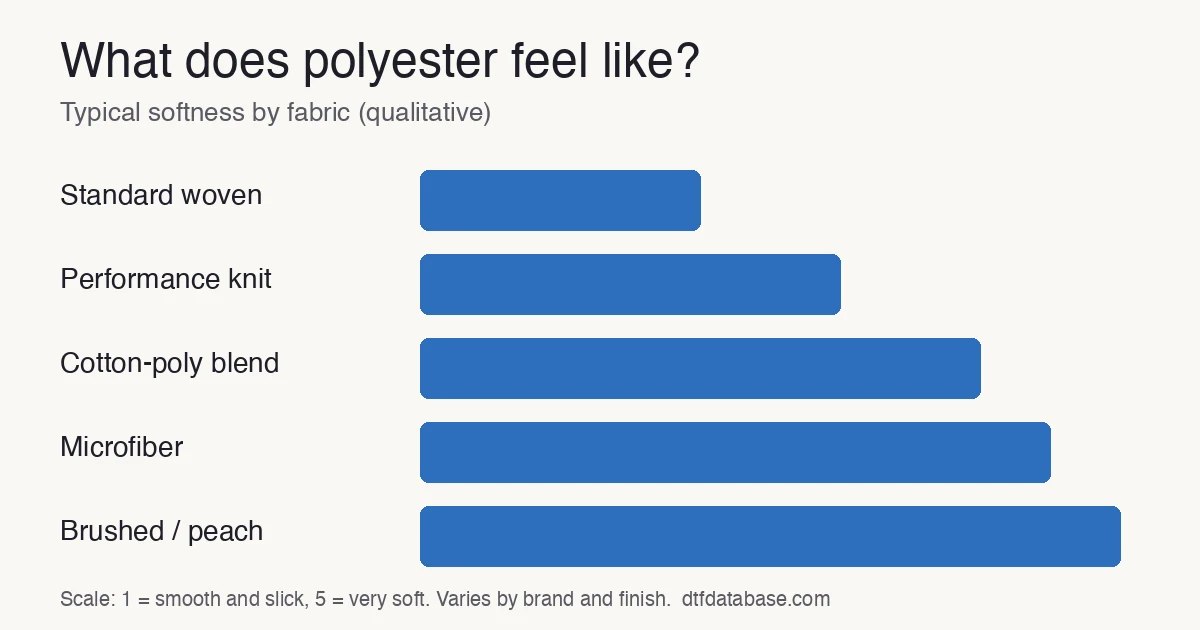
Polyester usually feels smooth, lightweight and slightly slick, with less natural softness than cotton. Standard polyester can feel synthetic or clammy, while microfiber and brushed finishes feel soft and peachy. Blends with cotton feel closer to a regular t-shirt. The exact feel depends on the fiber, weave and finish.
Most of the confusion comes from the word "polyester" covering very different fabrics. A thin satin lining, a fleece blanket and a gym shirt are all polyester, and they feel nothing alike.
Why polyester feels the way it does
Polyester is a synthetic fiber made from petroleum-based polymers and extruded as smooth filaments. Four things set how a polyester fabric feels in the hand:
- Fiber type. Long continuous filaments feel smooth and slick. Cut staple fibers spun into yarn feel drier and closer to cotton.
- Fiber thickness. Very fine fibers, such as microfiber, feel softer than standard thickness fibers.
- Weave or knit. A tight woven fabric feels crisp, while a jersey knit feels stretchy and softer.
- Finish. Brushing, peaching and moisture-wicking treatments change the surface after the fabric is made.
Because the fiber itself is smooth and absorbs very little water, polyester has little of the dry, fibrous grip that cotton has.
How different polyester fabrics feel
The table describes typical behavior. Individual fabrics vary by brand, weight and finish.
| Fabric | Hand feel | Weight | Stretch | Breathability | Typical uses |
|---|---|---|---|---|---|
| Standard woven polyester | Smooth, slightly slick, can feel crisp | Light to medium | Low | Low | Linings, flags, banners, uniforms |
| Microfiber polyester | Soft, smooth, sometimes peachy | Light to medium | Low to moderate | Low to moderate | Bedding, soft apparel |
| Brushed or peach-finish polyester | Soft and fuzzy or suede-like | Medium | Varies | Low | Fleece, jackets, blankets |
| Athletic performance knit | Light, smooth, often slightly textured | Light | Moderate to high | Moderate, wicks moisture | Gym shirts, jerseys |
| Cotton-poly blend | Close to a regular cotton tee | Medium | Moderate | Moderate | T-shirts, hoodies |
Polyester vs cotton, silk, wool, nylon and rayon
- Cotton: Softer and more breathable in everyday wear. Polyester feels smoother and lighter, and dries faster.
- Silk: Both can be smooth, but silk is cooler and drapes more fluidly. Satin polyester imitates silk's sheen.
- Wool: Wool is warmer and bulkier, with a springy, textured feel. Polyester is flatter and lighter.
- Nylon: The closest synthetic relative. Nylon often feels slightly silkier and stretchier, while polyester tends to feel a little crisper.
- Rayon and viscose: These feel soft and draped like silk or cotton. See the viscose fabric DTF guide for how that fabric behaves.
Does polyester feel hot or sweaty?
It can. Polyester absorbs very little moisture, so sweat tends to sit on the skin or on the fabric surface instead of soaking in. In tightly woven or non-vented polyester that can feel clammy. Performance knits are built to wick moisture to the surface so it evaporates, which makes them feel drier during exercise, but they can still hold odor. The is cotton moisture wicking guide compares the two fibers in more detail.
Why does some polyester feel scratchy or cheap?
- Low-grade fiber or finish: Coarse, thick fibers feel rough, and a stiff finish feels plasticky.
- Tight, flat weave: Dense weaves can feel stiff and papery.
- Static: Polyester builds static easily, which makes it cling and feel unpleasant in dry conditions.
- Pilling: Loose fiber ends ball up on the surface with wear and make the fabric feel rougher over time.
How to tell if a garment is polyester by touch
Touch is only a hint. Check the care label first, because fiber content is printed there. If the label is missing, polyester usually feels smooth and a little slippery, resists wrinkling when crushed in your hand, and shows little shrinkage. Burn tests are sometimes used to identify fibers, but they create fire and fumes, so they are not recommended for casual use.
What polyester feels like with DTF prints
A DTF transfer is a thin film of ink and adhesive bonded to the surface of the fabric. It does not soak into polyester the way ink soaks into cotton, so the print sits on top and feels like a flexible layer on a smooth surface. Large solid areas feel more noticeable on a thin, light polyester fabric than on a thicker blank.
- Temperature: Polyester reacts to heat more than cotton does. The DTF Database temperature chart lists 100% polyester at 270 to 285 degrees F for 10 to 12 seconds with medium pressure (30 to 40 psi) and a cold peel. The heat pressing polyester guide covers scorching and shine marks.
- Dye migration: Dye in dyed polyester can bleed into the white and light ink layers when pressed too hot. The dye migration guide explains prevention.
- Stretch: The fabric stretches more than the print does, so a stretchy performance knit needs testing. See the DTF print cracking and peeling guide.
- Fabric after heat: Heat can also change how polyester behaves in the wash. The can you shrink polyester guide covers that.
For general technique, see the DTF heat press tips.
How to choose polyester for your purpose
- Weight: Lightweight for activewear, medium for tees, heavier for jackets and fleece.
- Stretch: Choose a stretch fabric for sportswear, and test the print on it.
- Finish: Microfiber or brushed for softness, standard woven for durability.
- Care label: Confirm the fiber content and washing limits.
- Sample first: Order one blank to check the hand feel and run a test print before ordering in bulk. The best shirts and blanks for DTF transfers guide lists blank options.
Frequently Asked Questions
Is polyester itchy?
Usually not, but it can be. Polyester made from coarse fibers or with a stiff finish can feel scratchy against the skin. Microfiber and brushed polyester are generally soft, and many people find polyester fine in a smooth knit.
Is polyester soft?
It depends on the fabric. Standard polyester feels smooth rather than soft, while microfiber and brushed or peach-finish polyester feel noticeably soft. Cotton-poly blends feel soft in a familiar t-shirt way because of the cotton.
Is polyester breathable?
Not as breathable as cotton in most forms. Polyester absorbs little moisture, so it can feel clammy in heat. Performance knits wick sweat to the surface so it evaporates, which helps during exercise.
Does polyester feel like cotton?
Not by itself. Polyester feels smoother, lighter and slicker, while cotton feels drier and more fibrous. Cotton-poly blends and some spun polyester knits come closer to the feel of cotton.
Can you print DTF on polyester?
Yes. DTF transfers bond to polyester, but it needs a lower press temperature than cotton and attention to dye migration on dyed fabric. Test one garment before a full run.
Related Guides
Tags
About the Author
DTF Database Founder
Darrin DeTorres has over 10 years of experience in the print industry, specializing in screen printing, sublimation, embroidery, HTV, and DTF printing. He runs Notice Me Marketing and Media, a custom apparel production company that prints thousands of shirts per month.
More from Tutorials
Can you shrink polyester? Yes, but only with high heat, and results vary. Learn safe methods, blend behavior, and what it means for DTF prints.
Explore DTF Database
Browse and compare 20+ verified DTF printer models by price, features, and specifications.
Read moreCalculate your per-print costs, profit margins, and ROI for DTF printing.
Read moreBrowse verified DTF suppliers for ink, film, powder, and equipment.
Read moreFind DTF transfer suppliers shipping to your state, with verified turnaround times.
Read moreMetro-level DTF supplier guides for Los Angeles, NYC, Dallas, Houston, and more.
Read moreStep-by-step guide to the DTF printing process with temperatures and troubleshooting.
Read more